I told a managing partner last month that his biggest AI risk was his people.
He thought I was changing the subject.
He had just walked me through an automation roadmap. Document assembly, client intake, research workflows. Real tools, real timelines, real budget. Vendor demos scheduled, a project timeline, even a rough ROI model. We had done the work.
So I asked what his plan was for developing the people who would work with these tools.
Silence. Then: "That's more of an HR thing."
The response that keeps coming up
That answer comes up in almost every AI strategy conversation I have with professional services leaders. Some version of it, anyway. The technology plan is detailed. The people plan is an afterthought. Or there isn't one at all.
This is why so many AI rollouts stall after the initial quick wins.
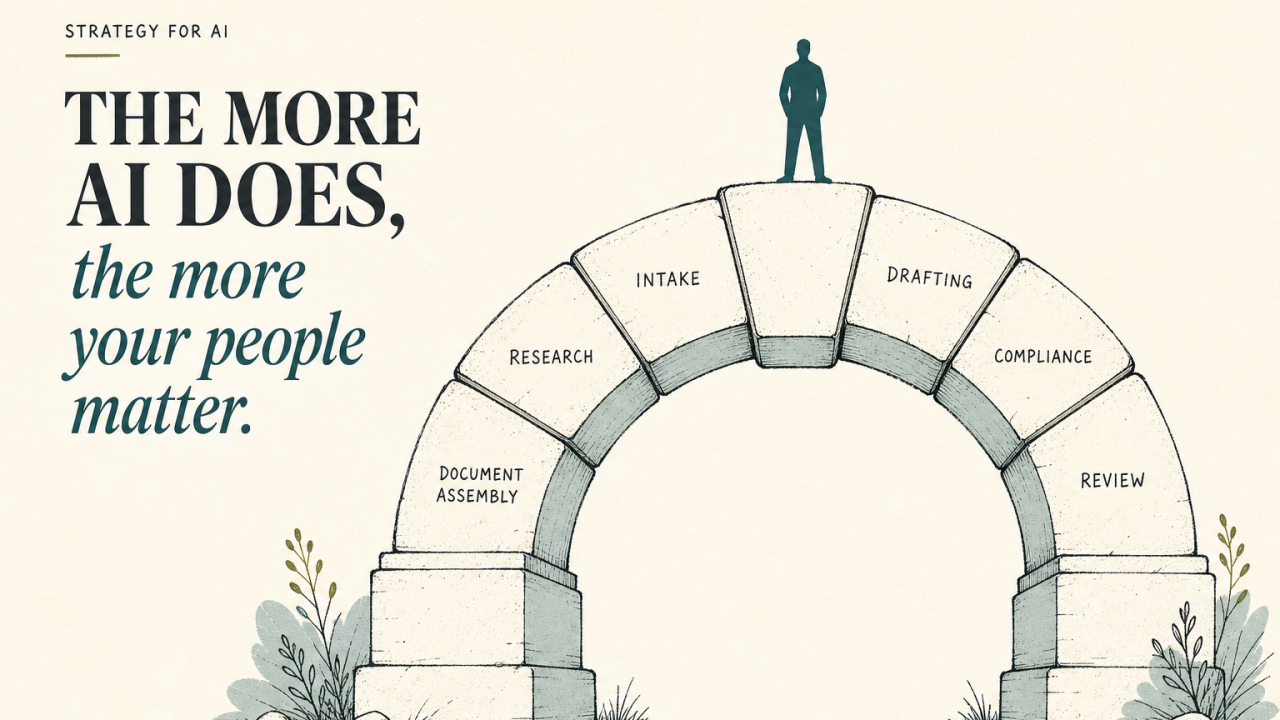
The first wave of automation is easy. Find a manual process, point a tool at it, measure the time saved. Everyone celebrates. The ROI deck looks great.
Then the easy stuff is done. And the work that remains looks nothing like it did before.
What actually happens when you automate the routine
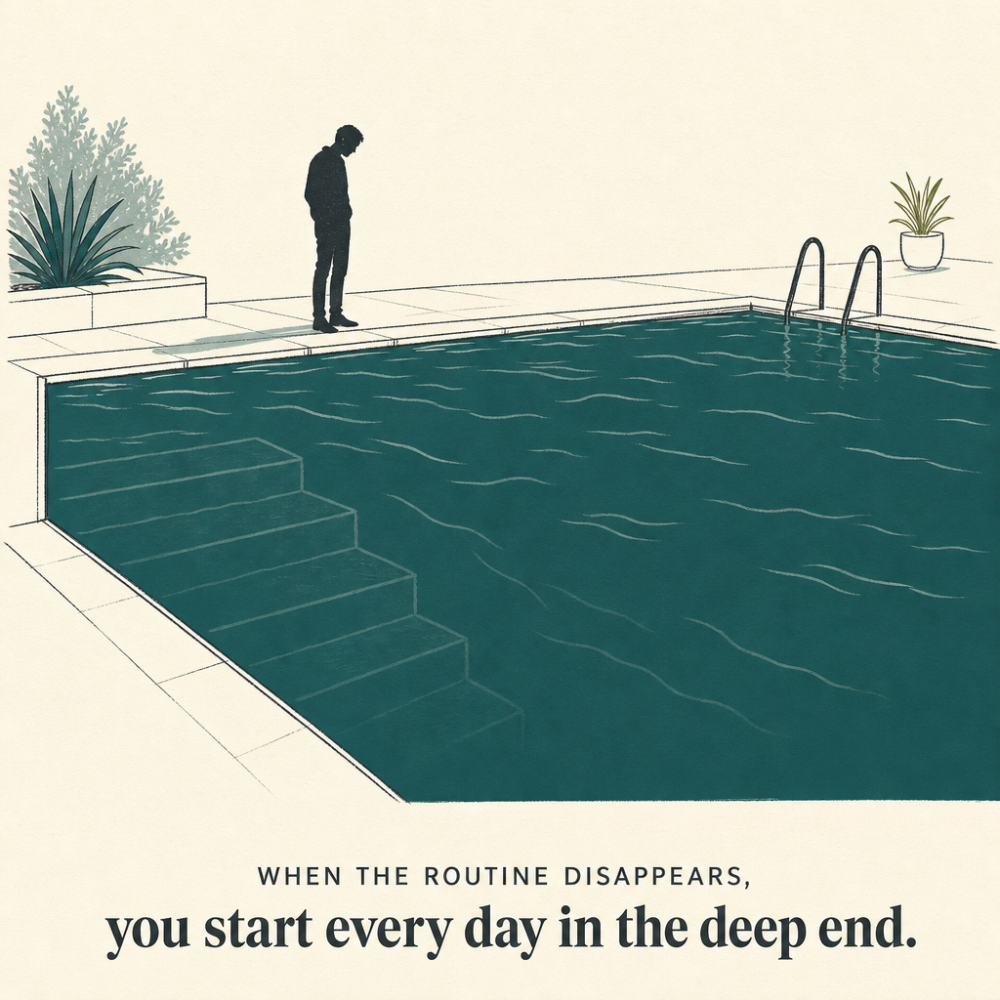
When you automate document review, the judgment calls are all that's left. Unusual edge cases, the things that require real expertise. The routine work was the warm-up. Now your team starts every day in the deep end.
Those repetitive tasks everyone complained about? They were building instincts. A junior associate who spent two years reviewing contracts developed pattern recognition that no training program can replicate in a two-day workshop. When AI handles that work, you need a completely different approach to developing talent. Most firms haven't thought about what that looks like yet.
And then there's the senior side. A partner who can now do in an hour what used to take a team a week sounds great on paper. But that only works if the partner knows how to direct AI output, evaluate its quality, and catch what it misses. Many don't. They've spent decades managing people, not reviewing machine output.
For companies billing by the hour, they also have a business model problem. When your deliverable used to take 40 hours, the client paid for the effort. When AI produces the same deliverable in 4 hours, the client should now pay not only for the outcome, but for the insight.
Your team needs to move from "we found a problem" to "we think you should do this major fix to solve it." That takes a different kind of confidence than most junior staff have been trained for (and maybe even some senior staff).
What the firms getting this right are doing
The firms I work with that are succeeding with AI have one thing in common: they're investing in their people's growth at the same pace they're investing in automation.
Mentorship is getting redesigned. When AI writes the first draft, junior employees learn by evaluating and improving output rather than creating it from scratch. That's a different skill, and it requires different coaching. Some firms are assigning senior reviewers specifically to teach junior employees how to spot where AI gets it wrong, which is its own expertise. In a way, these employees are now managers of the AI and need more managerial skills.
Partners are learning to review AI output, which sounds simple until you try it. Reviewing a document that AI assembled from multiple sources requires a different eye than reviewing an associate's work. The errors are different. The failure modes are subtler.
A few firms are rethinking career paths entirely. If billable hours matter less as a measure of contribution, what replaces them? The ones figuring this out early are building paths around judgment, client relationships, and the ability to turn AI capabilities into business outcomes.
Some are pairing technical staff with client-facing teams so both sides learn what the other actually needs. The technologists learn what matters to clients. The client teams learn what the tools can do. Neither group gets there alone.
The gap that gets wider
AI makes your team's weaknesses more visible, not less. When routine work disappears, what remains is the thinking. If your team hasn't been developed to think critically under ambiguity, that gap shows up fast.
I watched this play out recently. A firm automated a process that had taken employees two full days. The automation worked perfectly. Faster, more consistent, fewer errors. Then the AI flagged something unusual in a client file. The team had to readjust their process to go deeper into that problem, since they didn't have the natural learnings of the day-to-day routine of being in that data.
The shortcut removed the learning, not just the labor. We have to figure out ways to continue to build employee connections to the story of the data while removing the drudgery.
The missing chapter
Most AI roadmaps I review have detailed sections on technology selection, integration timelines, security requirements, and cost projections. Almost none have a serious plan for people development, change management, communications. This is the hard stuff.
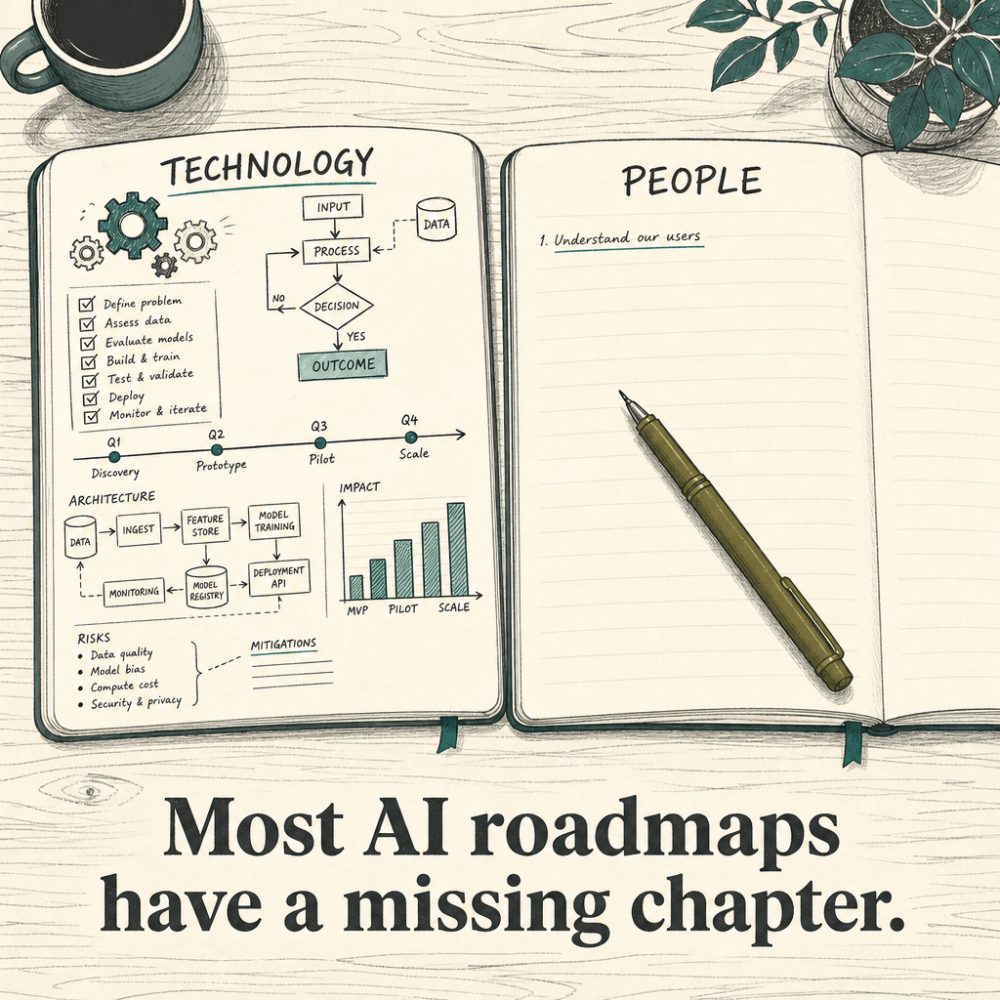
If your AI roadmap doesn't have a people chapter, one that addresses how you'll communicate with, train, mentor, evaluate, and grow your team alongside the technology, you're building on a gap that gets wider with every automation you ship.
The firms that figure this out won't just have better technology. They'll have better people and a better company. In professional services, that's the only advantage that actually compounds.
Originally published by Brad Bush on LinkedIn.
Want a copy to keep or share?
Get this essay as a PDF you can save or send to colleagues.